In cargo transportation, container terminals are equipped with container lifting equipment to handle containers efficiently. Based on operational experience from container ports worldwide, a typical scenario is that many underground container storage areas are equipped with one to three container lifting units. When selecting and configuring container lifting systems, several key performance parameters must be considered.
Outreach refers to the maximum horizontal distance from the axis of the quay-side sliding rail to the vertical axis of the container handling spreader. The required outreach depends primarily on the width of the vessel berthed at the port and must also account for the maximum allowable stacking height on the main deck. Even when a vessel lists or tilts outward, the container lifting system must still be able to lift containers located at the top and outermost positions of the main deck.
The lifting capacity of a container lifting system is calculated as the rated lifting capacity plus the total weight of the handling equipment (spreader). Since spreaders come in various types and weights, and operational standards differ across ports, the lifting capacities of container lifting systems vary worldwide.
When determining the lifting capacity, the following factors are usually considered:
When handling the hatch covers of container ships, the total weight of an individual cover typically does not exceed 28 tons. For non-standard or non-international containers, alternative methods may be used, such as simultaneously lifting two 20ft containers, whose combined weight generally reaches approximately 40.6 tons.
The inner reach refers to the maximum horizontal distance from the inner sliding rail axis of the container lifting system to the vertical axis of the spreader. When determining the inreach, two main considerations are addressed:
The lifting height of a container lifting system consists of two parts:
Lifting height is influenced by several factors: container dimensions, waterline, tidal range, the number of stacked containers on the main deck, the absolute port elevation, and potential vessel tilt.
Currently, most quay-based container lifting systems designed and manufactured worldwide are configured with a lifting height of approximately 25 meters above the rails and 12 meters below the rails.
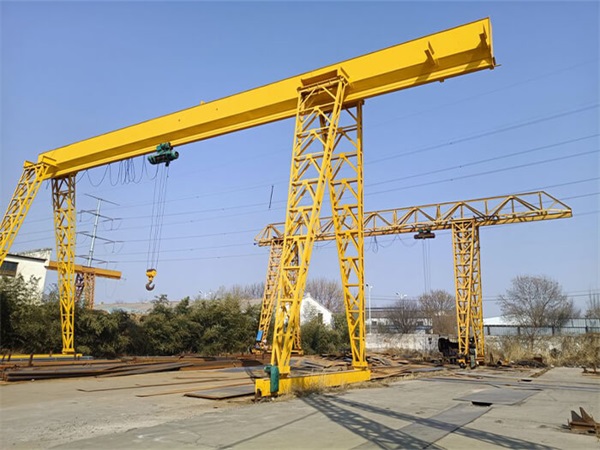
MH type electric hoist gantry crane is used together with CD MD model electric hoists.
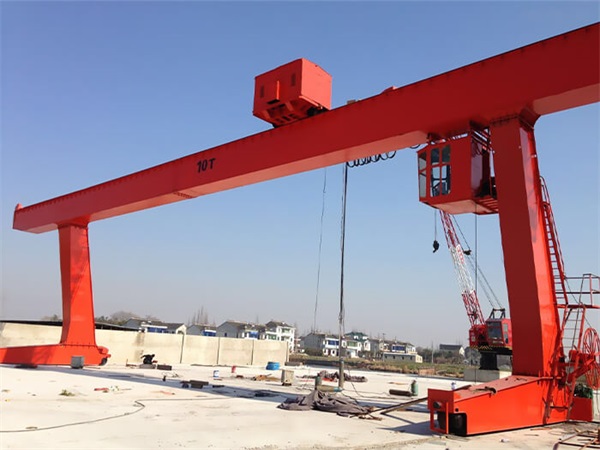
L Type electric hoist gantry crane match with CD1/ MD1, HC type Electric Wire rope hoist, to lifting and transporting the heavy materials, mainly use indoors and outdoors.
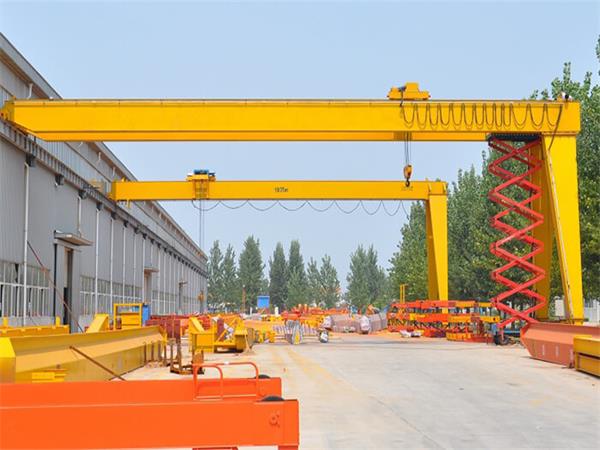
BMH Type Semi Gantry Crane is a bridge-type crane whose bridge is supported on the ground track through outriggers on both sides.
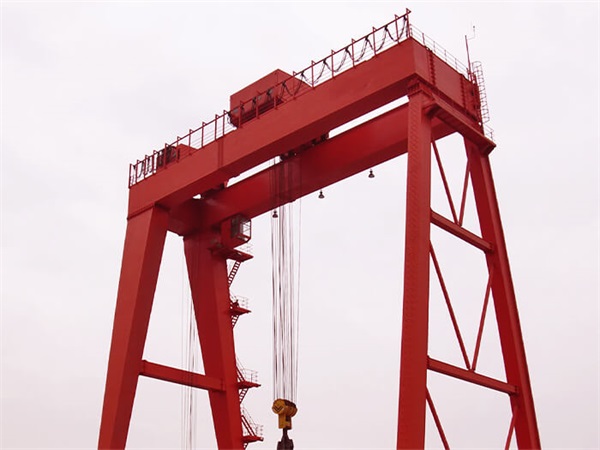
A-type Double Beam Hook Gantry Crane, It is mainly composed of a gantry (main beam, outriggers, lower beam, etc.), a lifting mechanism, a running mechanism and an electronic control part.
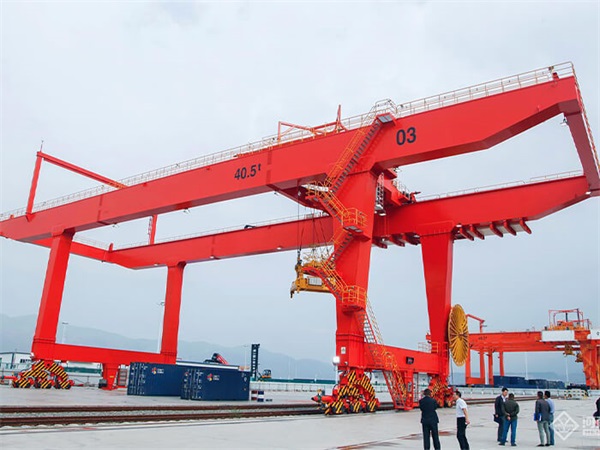
The rail-mounted container gantry crane (English abbreviation RMG) is one of the special machines for container yards.
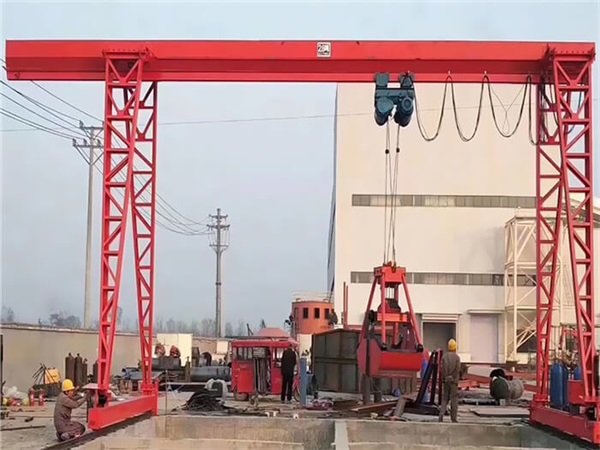
MZ Type Double-beam Grab Gantry Crane are mainly used in conjunction with bridge cranes, port cranes, and winches. They are widely used in ports, power plants, docks, chemical industries, etc. to grab various types of loose accumulations, such as ore, coal, slag, etc.
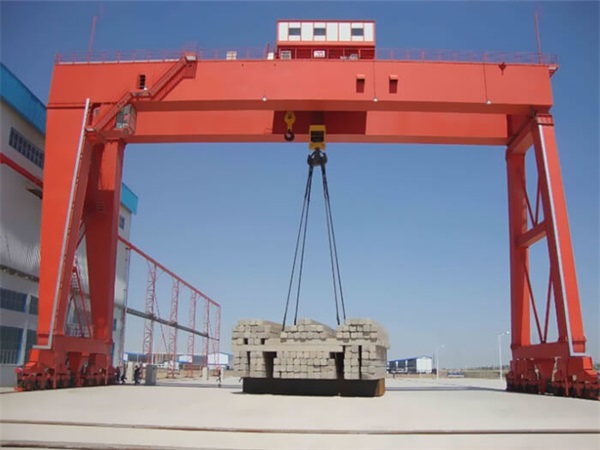
Winch Gantry Crane are used in open warehouses, windy areas, material stocks area, bridge building, concrete industry, cement plant, granite industry, construction industry, engineering industry, port, transportation, construction, dockyard, and other building sites for lifting and loading unloading objects.
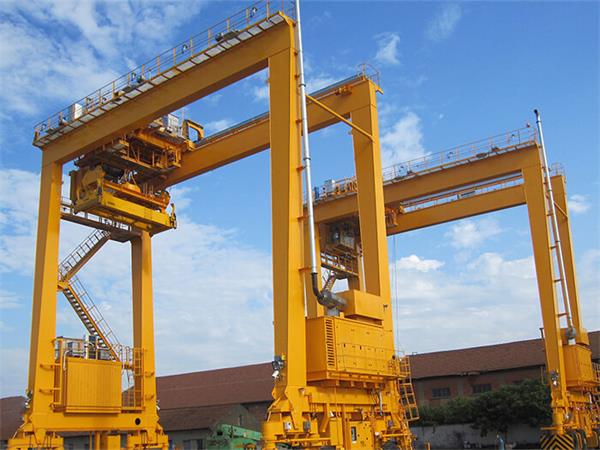
U Type Subway Turn Slag Hook Gantry Crane also known as subway slag flipping machine, slag flipping gantry crane, slag flipping gantry crane, etc., is a specialized gantry crane used for excavation in subway and tunnel construction projects.
We design cranes that meet your needs. Whether you need to increase safety, maximize production capacity or reliability, or reduce costs, we deliver.
