Choosing the right hoist is essential for ensuring safety, improving efficiency, and reducing long-term operating costs.
There is no one-size-fits-all solution. The correct hoist must match your specific lifting requirements, working conditions, and usage frequency.
If you are not sure which hoist is suitable for your project, we can help. We provide customized hoist solutions based on your lifting capacity, height, and working environment. Contact us to get a fast and professional quotation.
Selecting the wrong hoist can lead to:
By evaluating the right factors in advance, you can ensure reliable performance and maximize your investment.
Capacity refers to the maximum weight the hoist needs to lift, including the load and any lifting attachments such as magnets, grabs, or lifting beams.
Hoists are available from small capacities (around 1/8 ton) to over 100 tons.
When selecting capacity:
Choosing the correct capacity is critical for both safety and equipment lifespan.
Lift is the total vertical distance the load needs to travel.
It should be calculated from the pick-up point to the highest lifting position of the hook.
When determining lift:
Proper lift calculation prevents installation issues and ensures smooth operation.
Lifting speed, usually measured in feet per minute (FPM), directly affects productivity.
In general:
For more advanced applications:
If your operation requires high efficiency or precision, speed control becomes a key factor.
Duty cycle is one of the most critical factors for long-term reliability.
It defines how intensively the hoist will be used, including:
Applications can range from light-duty to heavy-duty (such as H4 or H5 classifications).
Ignoring duty cycle can result in overheating, motor failure, and reduced lifespan.
Hoists can be powered in different ways depending on the application:
Manual hoists are suitable for low-frequency and non-production environments.
Electric hoists are the most common choice, offering efficiency and ease of operation, but they may require rest periods depending on duty cycle.
Pneumatic hoists (air-powered) can operate continuously and are ideal for heavy-duty or hazardous environments, but they require a stable air supply.
Control options also matter:
The right control system improves safety and operator convenience.
The mounting method affects stability and performance.
Common types include:
Hook-mounted hoists, which are flexible but allow some load swing.
Lug-mounted hoists, which provide a more rigid and stable connection.
Trolley-mounted hoists, which can move along beams or rails and are commonly used in overhead crane systems.
Choosing the correct mounting type ensures proper alignment and safe operation.
The operating environment plays a major role in hoist selection.
Key considerations include:
You should also evaluate the nature of the load:
Environmental factors can significantly affect equipment durability and safety.
Safety should never be overlooked when selecting a hoist.
Essential safety features include:
In addition, the hoist must comply with international standards such as:
Compliance ensures safe operation and meets legal requirements.
To select the best hoist, you should evaluate:
Not sure how to choose? Tell us your project details, and our engineers will recommend the most suitable hoist solution for you.
Successful hoist selection requires a systematic approach.
By carefully analyzing capacity, lift, speed, duty cycle, power source, mounting type, and environment, you can choose a hoist that delivers safe, efficient, and reliable performance.
Working with an experienced supplier can help you avoid costly mistakes and ensure the best results for your project.
If you are planning to purchase a hoist and need expert advice, we are ready to assist.
We provide customized lifting solutions with competitive factory pricing and fast delivery.
Send us your requirements today and get a professional recommendation and quotation within 24 hours.
hoist selection guide, how to choose a hoist, hoist capacity calculation, lifting equipment supplier, industrial hoist selection, hoist manufacturer
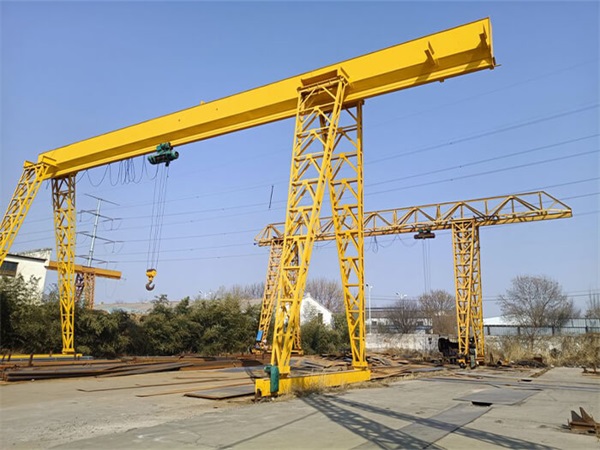
MH type electric hoist gantry crane is used together with CD MD model electric hoists.
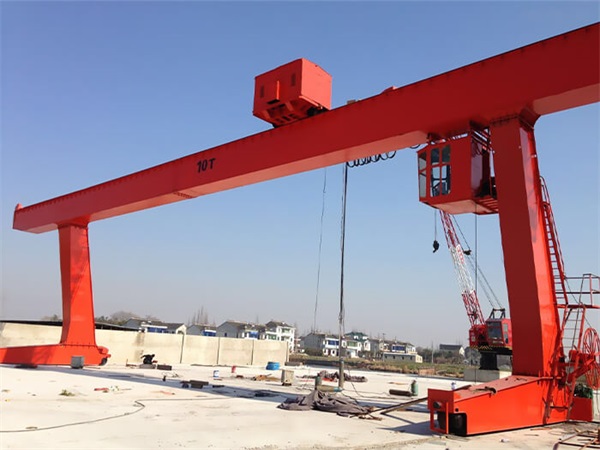
L Type electric hoist gantry crane match with CD1/ MD1, HC type Electric Wire rope hoist, to lifting and transporting the heavy materials, mainly use indoors and outdoors.
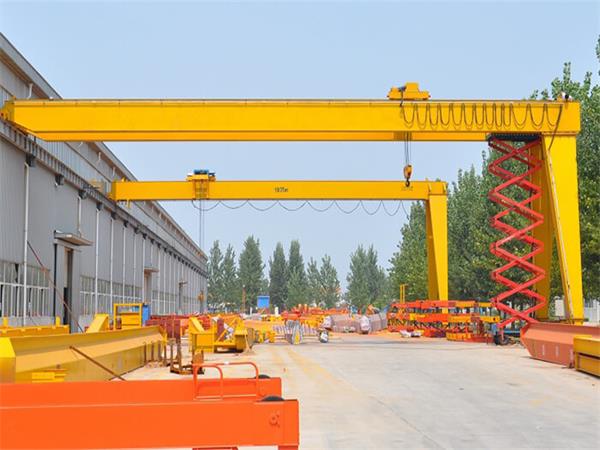
BMH Type Semi Gantry Crane is a bridge-type crane whose bridge is supported on the ground track through outriggers on both sides.
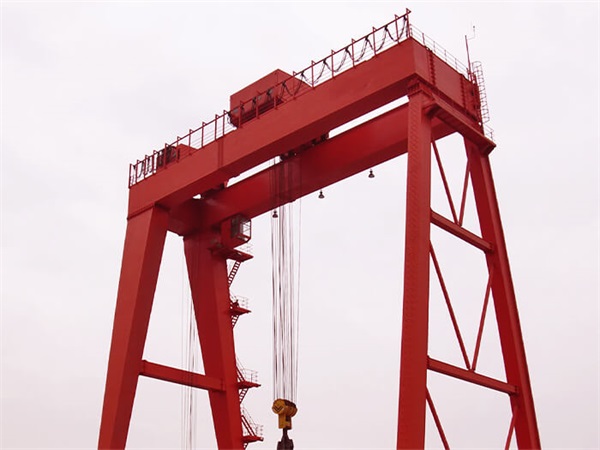
A-type Double Beam Hook Gantry Crane, It is mainly composed of a gantry (main beam, outriggers, lower beam, etc.), a lifting mechanism, a running mechanism and an electronic control part.
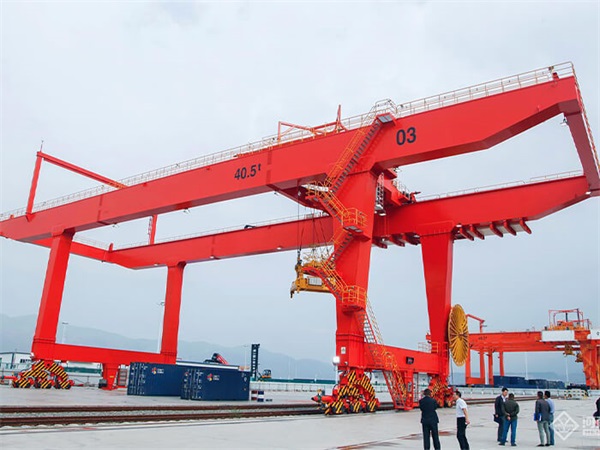
The rail-mounted container gantry crane (English abbreviation RMG) is one of the special machines for container yards.
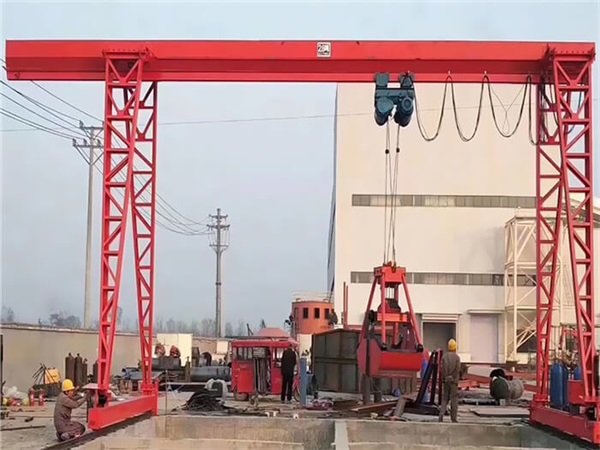
MZ Type Double-beam Grab Gantry Crane are mainly used in conjunction with bridge cranes, port cranes, and winches. They are widely used in ports, power plants, docks, chemical industries, etc. to grab various types of loose accumulations, such as ore, coal, slag, etc.
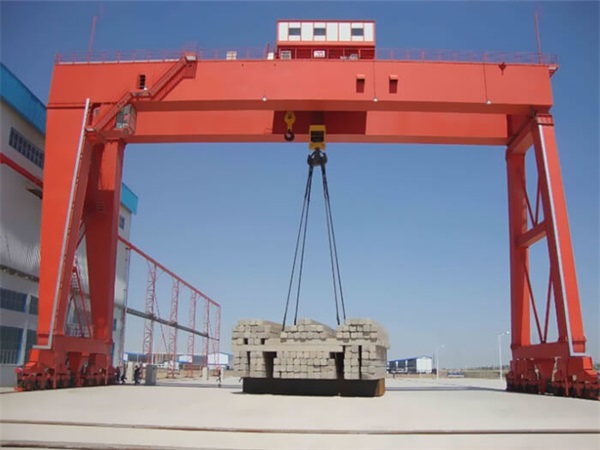
Winch Gantry Crane are used in open warehouses, windy areas, material stocks area, bridge building, concrete industry, cement plant, granite industry, construction industry, engineering industry, port, transportation, construction, dockyard, and other building sites for lifting and loading unloading objects.
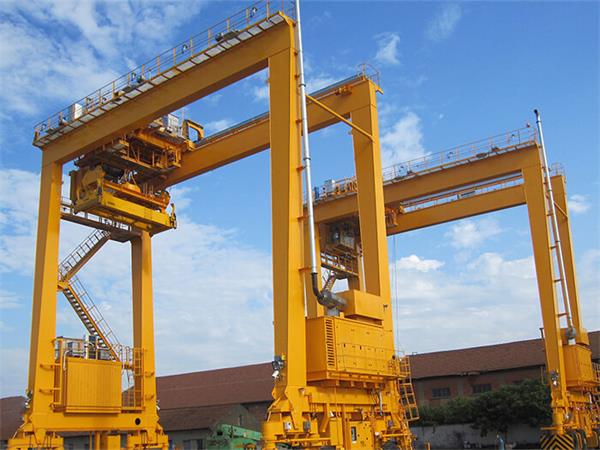
U Type Subway Turn Slag Hook Gantry Crane also known as subway slag flipping machine, slag flipping gantry crane, slag flipping gantry crane, etc., is a specialized gantry crane used for excavation in subway and tunnel construction projects.
We design cranes that meet your needs. Whether you need to increase safety, maximize production capacity or reliability, or reduce costs, we deliver.
